Dr. Chaim Botwinick
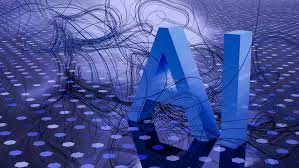
On February 10, 2025, I posted a Times of Israel blog entitled: “Artificial Intelligence and the Ever-Changing Day School and Yeshiva Landscape“.
In response to the post, there were folks who felt that AI offers innovative, creative and inspiring 21st century opportunities. And, there were others who were adamantly against the use of AI technology in our Jewish day schools and were at best very skeptical about its value and utility.
The purpose of this article is not intended to inspire us to think strategically about the potential use and misuse of AI technology in our Jewish day schools and yeshivot.
First, it’s essential to note that our Jewish day school and yeshiva communities are currently in the throes of one of the most rapidly changing and complex information technology transformations in recent history. In fact, these challenges, not unlike other non-Jewish private schools are currently evolving at breathtaking speed and meteoric frequency, and they are now on a trajectory of unlimited scope, potential and magnitude.
Today’s technological advances have been evolving for many years and are only now being fully recognized as many of our schools “push the technology envelope” as never before imaginable. These evolutionary changes in our schools, are a mirror image of the challenges and realities which we are currently experiencing in our general society. But, at the end of the day, the question remains, is AI good or bad for our Jewish day schools and yeshivot? And, at what cost to our demand for high quality chinuch.
Conversely, the question must also be raised about how AI may negatively impact our Jewish day schools and yeshivot with irreparable damage.
Impact of AI Technology
The current and potential impact of AI technology in education is evolving at lightning speed.
Our general educational community is rapidly integrating AI in order to transform classroom learning, save teachers hours of prep time, and engage students in independent text study. These include interactive text exploration, enhancing teacher efficiency and differentiation, and adaptive learning paths.
It is therefore essential that our Jewish educational community understand its impact and potential application.
This does not necessarily suggest that our schools blindly jump into the fray in order to utilize AI, but rather be given the opportunity to more fully understand and appreciate its uses, misuses and responsible application, if they so choose.
I vividly recall the controversy in our yeshiva community when Google was first introduced as a new and exciting search platform. There were many heads of school, principals and Roshei Yeshiva who felt that it would comprise student intellectual curiosity, create a society of lazy dependent students and impact negatively on student learning and processing skills. Well, today I can’t think of one yeshiva or day school that does not rely heavily on Google searches for research, references and for administration as well as for creative and innovative instructional models in limudei kodesh and limudei chol . The one caveat is that it is used appropriately and responsibly and that there are strict guardrails for student and teacher use.
Several weeks ago, I heard a recorded podcast between several yeshiva heads of school who were comparing AI technology to cell phone use. Although it was a bit of a stretch, cell phone use is an entirely different animal. Yes, cell phone devices as a valuable communication tool relies on technology, but that does not make them bad. What makes cell phone use challenging and at times problematic and even “dangerous” is the lack of supervision of children who use it, the ease in which it can be misused and the inability to continuously monitor student use.
As a result, today there are many Jewish day schools that are not only prohibiting cell phone use in their schools, but have also banned what’s now referred to as “kosher phones” as well.
Although it is not within the purview of this writer to support or reject this course of action, I can clearly understand why and how AI technology can be viewed as a potential threat.
Essentially, many schools are threatened by what they can’t control. Technology is at the top of that list.
The use or misuse of technology is a challenge of immense proportion, especially for those who are inexperienced or not trained in its use. But like everything in life, the more we use it, and safeguard against it misuse, the greater the comfort zone.
Getting back to the challenge of AI, the parallel should be obvious. The use and application of AI technology can be both daunting and profound.
The short and long-term impact of AI technology on the teaching-learning process is fascinating to say the least.
Our conversation should no longer be about whether technology should or should not be permitted or accepted in our Jewish educational institutions, or whether its uses are good or bad, “healthy” or “unhealthy”…… but, rather how we as a community utilize and celebrate the AI technological revolution as a beneficial 21st century reality and as an integral part of our educational community and society.
Friends, either way, AI is here to stay. The question remains, how do we control it as a useful tool as opposed to running the risk of it controlling us?
This reality does not suggest that all AI technology is 100% beneficial or “safe” for our schools and students. Like all innovations, especially those that are ubiquitous such as AI or “super” AI technology, it is essential that our schools utilize these technologies responsibly and with high degrees of knowledge, understanding, insight, sensitivity, transparency and accountability. To be sure, “we still do not know what we don’t know” about AI. This means that there is much that we must learn before we are 100% comfortable with the technology.
Parenthetically, reality begs the question – will we ever be comfortable with this technology?
In a February 2026 Times of Israel blog I referenced several impressive and enlightening articles on this topic. This includes the publication of Yeshiva University’s Torah To-Go, entitled “Illuminating the Future: Jewish Values and AI,” December 2024 Edition.
In that Issue, we are presented with an array of fascinating perspectives regarding moral responsibility, AI and halachic decision-making, and other AI related perspectives which impact upon our Jewish communities and their institutions.
It goes without saying that like all man- created innovations, technology requires specific “guardrails” in order to insure its proper, ethical, moral, and legal application.
The Benefits and Red Flags of AI in our Jewish Day Schools and Yeshivot
With the recent explosion of Artificial Intelligence, our Jewish educational institutions are experiencing administrative and educational advances as never before imaginable. From record keeping, payroll and HR administration, maintenance contracts, inventory control, the purchasing of school material and supplies, the processing of student admissions, registration and teacher applicant interviews as well as comparative bids, to the processing and selection of scholarship applications, transcripts, report cards and accreditation requirements – AI technology, supported by its algorithmic complex formulations will eventually become an indispensable and a formidable reality.
In addition to the unlimited ways in which this technolog may improve and enhance our day school and yeshiva administrative processes, procedures, capacities and effectiveness, it also has tremendous power, capacity and capabilities to improve and enhance the education and learning-teaching process – in of our schools, our classrooms, in the community and in our homes.
Having said that, the impact of AI on quality assurances in education is still in its infancy; and, the jury is out regarding its actual impact on the quality of education, learning and instruction. But, most experts do opine that the challenge of educational quality are currently being addressed and its gaps are now beginning to close fast.
AI Educational Applications
Not unlike its administrative utility, AI technology possess amazing educational applications and potential for student learning, teaching and instruction in our schools.
Several of these include, but are not limited to:
- Guided tutoring assistance;
- Class and lesson planning review; and, simulated testing, quizzes and academic assessments;
- Reference material for student learning and faculty instruction;
- Havruta study and the provision of Judaic reference material;
- Teacher/faculty performance assessments via algorithmic generated data and metrics;
- In-depth lesson and unit planning;
- Personalized learning material for special needs, gifted and talented students;
- Scalable and interpretation of academic grades and assessment scores;
- Test/assessment preparation;
- Coding for increased AI connectivity;
- Professional development (PD) programs and training modules spanning the entire curriculum;
- In-depth analysis and descriptions of Jewish values, moral behavior and middot tovot;
- Jewish literacy including the teaching and learning of Hebrew language, as well as the teaching and learning of talmud, chumash, TaNach, mishna, navi and halacha;
- AI assistant teacher and AI guided substitute faculty; and,
- The identification of curricular gaps as they relate to curricular standards and outcomes-based assessments.
Potential Red Flags
Although it is essential to identify the variety of potential benefits of AI use in our schools, it is equally important to understand its dangers, pitfalls and limitations.
Several of these threats may include: stunting student cognitive development and intellectual curiosity, impairing critical thinking skills, loss of creativity, compromising data privacy, and the erosion of human connection in learning environments (socialization).
Are these “red flags” sufficient for us to distance ourselves from this technology? Probably not. But, they do strongly suggest that our Jewish educational establishment must engage in due-diligence prior to moving full steam ahead with AI technology and that guardrails and precautions must be in place. To be sure, we must understand and respect its uses, misuses and limitations.
Not doing so is very foolish and somewhat short-sighted.
Conclusion
As our Jewish day schools and yeshivot begin to experience AI use and its transformative application in both the school’s administrative and curricular domains, our communities and their educational institutions will be challenged to maintain the feverish pace of its growth and involvement in order to carefully utilize and exploit this powerful educational tool.
From a Jewish day school and yeshiva perspective, the next AI frontier will be to utilize AI effectively in the home, school and classroom without compromising high quality ethical or moral standards.
As we know, it is one level to understand, appreciate and embrace AI generated innovation; it’s another to learn how to use it and apply it effectively and responsibly as well as how to inspire its use in our schools.
At the end of the day, it’s all about the proper and appropriate application of AI, which may take decades to refine and improve. Until then, we must be extremely careful, cautious and circumspect about when, how and where we use AI technology in our Jewish educational institutions.
ABOUT THE AUTHOR
Dr. Chaim Botwinick is a senior executive coach and an organizational consultant. He served as president and CEO of the central agency for Jewish education in Baltimore and in Miami; in addition to head of school and principal for several Jewish day schools and yeshivot. As an Influencer, he has published and lectured extensively on topics relating to education, resource development, strategic planning and leadership development. Dr. Botwinick is Author of “Think Excellence: Harnessing Your Power to Succeed Beyond Greatness”, Brown Books, 2011
