

Growing up in South Florida, Sruly Meyer loved watching cooking competition shows and wondered if there would ever be a place on that kind of stage for a kosher cook.
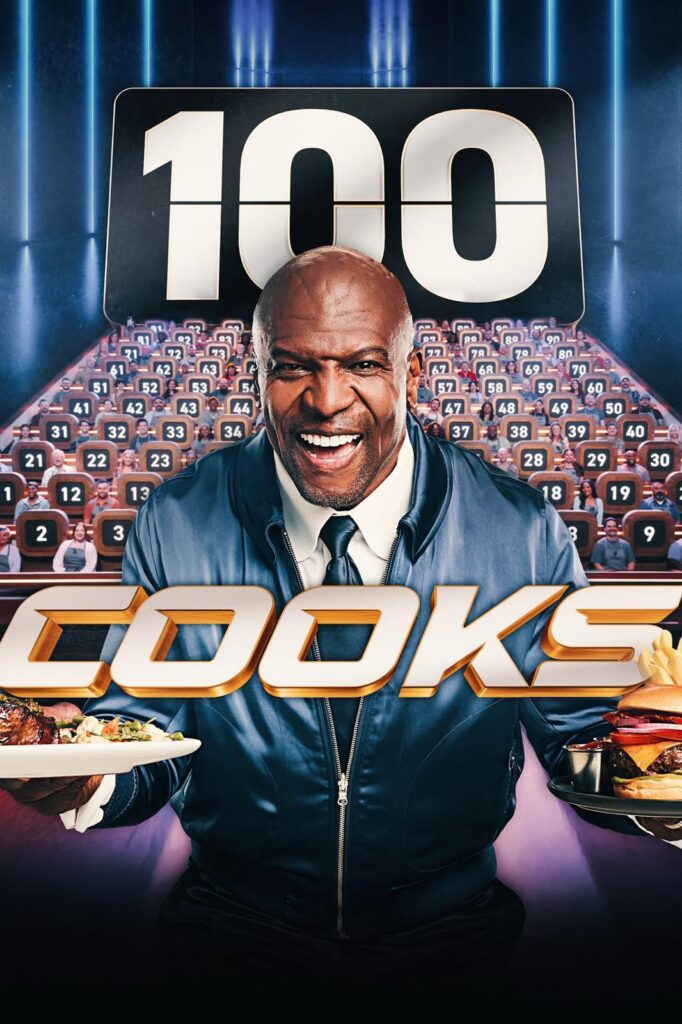
This summer, the South Florida native known online as “Sruly Cooks” will get the chance to find out as a contestant on Food Network’s new competition series 100 Cooks, hosted by Terry Crews and judged by Alex Guarnaschelli and Nick DiGiovanni.
For Meyer, who was born and raised in South Florida and now lives in Walnut Creek, the experience was never just about cooking. It was about walking into a world he admired for years while openly representing Orthodox Judaism on one of the biggest food platforms in the world.

“I used to watch these cooking competitions and honestly never imagined I’d ever get the chance to do something like this,” Meyer says. “Normally I’m just alone in my kitchen with an iPhone and a light filming recipe videos. Then suddenly you’re standing in this massive studio with cameras, lights, producers, and very famous chefs judging your food. It was such an honor and also truly terrifying.”
Long before Meyer was creating kosher food videos, food was part of his life. He grew up in a large South Florida Jewish family, surrounded by Shabbos meals, yom tov cooking, family gatherings, and the growing kosher food scene that helped shape his palate. South Florida’s mix of Cuban, Caribbean, Latin, Israeli, and classic American influences also shaped the way people ate and cooked.
“I think growing up here definitely influenced the way I cook,” Meyer says. “South Florida has so much flavor. You have the heimish food we all grew up with, but also bright, bold flavors from all around you. I like showing that kosher food can be exciting, colorful, and not boxed into one style.”
The opportunity to appear on 100 Cooks did not happen overnight. Meyer says the process began with interviews with casting and production, who wanted to understand his cooking style, his personality, his story, and what it would mean for him to compete while keeping kosher.
“There were a lot of calls and questions,” Meyer says. “They wanted to know who I was, what my food was about, how I would handle pressure, and obviously how kosher would work in that kind of environment. It was exciting, but I also knew this wasn’t a regular situation for me.”
Before Meyer could agree to participate, there was a much bigger question that needed to be answered: could an Orthodox Jew navigate a mainstream cooking competition while properly keeping kosher?
According to Meyer, production was upfront that they would not be able to provide exclusively kosher ingredients or kosher cookware during the actual competition itself. Before committing, Meyer consulted with a group of rabbanim to better understand what was and was not halachically possible within the format of the show.
“There were a lot of conversations before I even said yes,” Meyer explains. “I needed to understand if this was something I could do properly within halacha. I spoke to different rabbanim, explained the format, explained what production could and could not provide, and tried to be transparent about every part of it.”
After receiving guidance and approval from two specific rabbanim, Meyer says the broader consensus among the rabbis he consulted was supportive, with the understanding that viewers should recognize the halachic complexities involved, including the fact that he would not be tasting his own food during the competition.
“That was a huge part of it,” Meyer says. “People watching need to understand that this was done with guidance. It was not simple. It was not casual. I took it very seriously, because when you are going onto a national platform as an Orthodox Jew, you are not only representing yourself.”
Meyer says one of the things that surprised him most during filming was how respectful and welcoming everyone was throughout the process.
“With everything going on in the world right now, I was definitely nervous walking into an environment with so many different people and cameras everywhere,” he says. “But everybody was incredibly kind and respectful. They even made sure I had kosher meals during filming breaks, and the other cooks were genuinely curious and respectful too.”
That curiosity led to conversations Meyer says he never expected to have.
“People started asking questions they probably never imagined they’d ask,” he says with a laugh. “Like, ‘What even is kosher?’ or ‘What is Shabbos?’ Since thankfully we didn’t film on Shabbos, I got to spend time with a lot of the cooks at the hotel just talking and answering questions. I was happy to do it.”
According to Meyer, the relationships formed during filming became one of the most meaningful parts of the experience. Away from the cameras, the cooks had time to get to know one another as people. They spoke about their families, their backgrounds, their food stories, and the paths that brought them together.
“We really became close,” he says. “I truly feel like I made friends for life through this. It was amazing to meet people from so many different places and realize how much we all had in common. Everybody came in with their own story, their own food, their own reason for being there.”
For Meyer, those relationships were also part of the larger purpose of the experience. He did not want to be seen as a curiosity, but as a real person, a proud Jew, a cook, a father, a friend, and someone who could connect with others through food.
“I hope people saw a normal Orthodox Jewish person who loves food, loves people, and is trying to do something positive,” Meyer says. “Sometimes people have never had a real conversation with someone who keeps Shabbos or keeps kosher. If I was able to answer with warmth and make people feel closer to our community, that means a lot to me.”
The moment also carries personal significance because Meyer has watched South Florida’s Jewish community grow into what it is today.
“When I was a kid, I could count the kosher stores and restaurants on the same hand,” Meyer says. “My class had six kids in it. Today, a native Florida Lubavitcher is competing on national TV in front of millions. That’s surreal to me.”
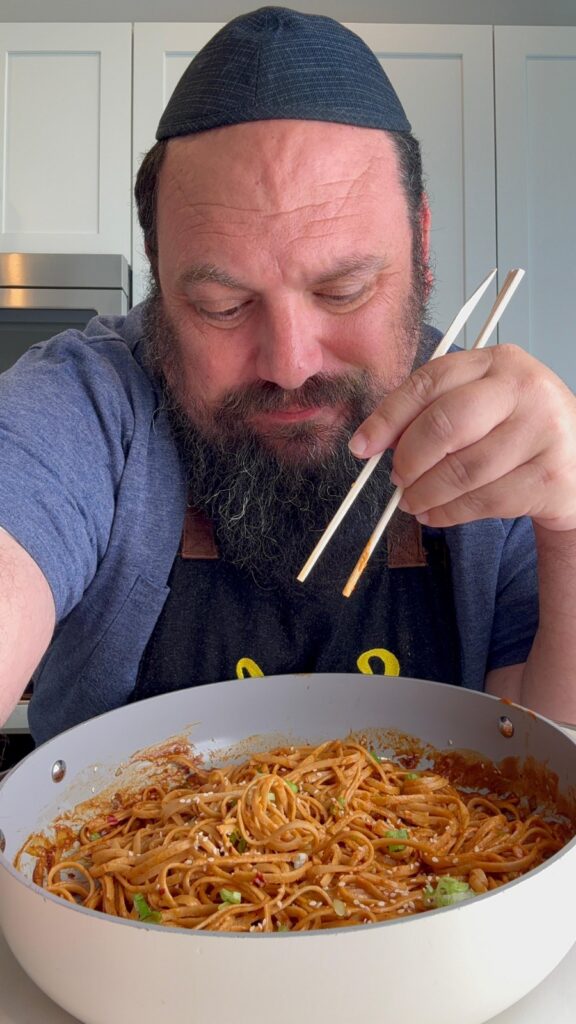
While many people recognize Meyer from his online food content, his approach has always been intentionally simple and approachable. Rather than focusing on overly technical restaurant-style dishes, he built his audience with quick recipes, restaurant review videos, and viral food trend taste-tests that feel realistic for everyday people.
“I’m not trying to make food intimidating,” he says. “I like showing people that food can be exciting without needing to be overly fancy. I want someone to watch and say, ‘I could make that,’ or, ‘I want to try that for Shabbos.’”
That same style also carries into his work as marketing director for KC Market, where behind-the-scenes kosher food videos regularly attract large audiences online. One recent pretzel challah bakery video generated more than 250,000 views.
“My belief has always been that people want to learn and see the process,” Meyer explains. “A lot of the people watching those videos probably aren’t Jewish at all, but they still connected to it. Kosher food can go viral too.”
For Meyer, the experience on 100 Cooks ultimately became about much more than competition. It became a chance to show pride in where he comes from, pride in his community, and pride in the possibilities of kosher cooking on a mainstream stage.
“I hope I made a Kiddush Hashem on the show, and I hope I can continue doing that for the people who follow me and for the cooks I met there,” he says. “At the end of the day, food brings people together. Sometimes all it takes is one conversation for people to realize we’re not so different after all.”
100 Cooks premieres June 7 at 9:00 PM Eastern on Food Network and will also stream on HBO Max.
