
Dr. Chaim Y. Botwinick
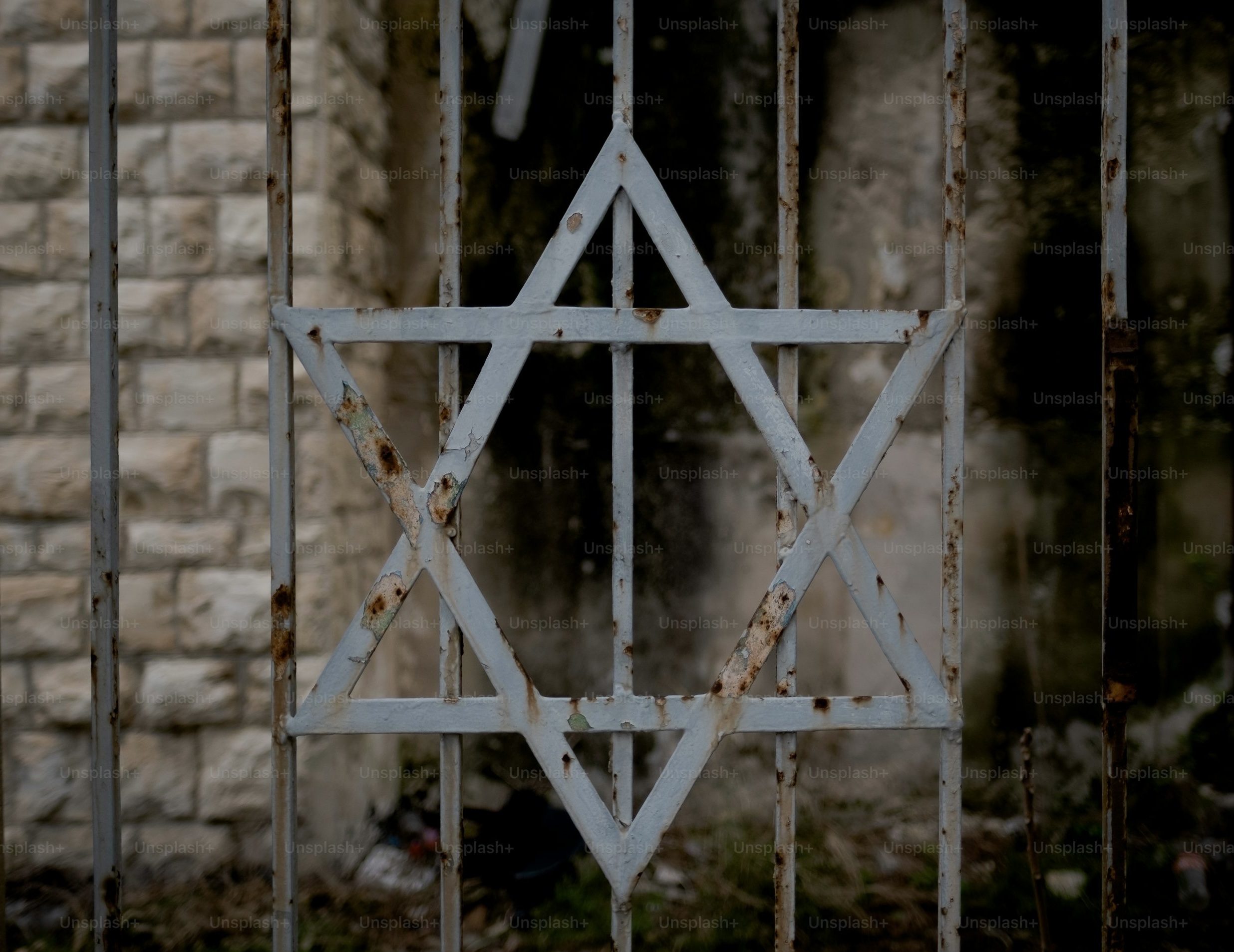
On the morning of December 14th we woke up to the shocking news from Australia regarding the most horrifying anti-Semitic terrorist attack on Jews since October 7th.
The attack took the lives of 15 people and injured more than 40 who were celebrating the first night of Chanuka on the beautiful iconic Bondi Beach. It was yet another vicious anti-Semitic dagger in the heart of our Jewish community.
Since October 7th our Jewish communities throughout the globe have been experiencing significant increases in anti-Semitism and Jew-hatred unsurpassed since the Holocaust.
These vile acts of Jew-hatred have manifested themselves through violent anti-Israel demonstrations, and the indiscriminate targeted beatings and killings of Jews in both the United States and Europe.
The recent terrorist attack against the Jewish community in Australia has attracted attention throughout the world and is sending shock waves in communities around the globe. It is also shining a bright spotlight on radical Islamic terrorism, anti-Semitism, the manner in which authorities have turned a blind eye on local anti-Semitic violence, and the growing vile Jew hatred throughout the world
As a result of this daunting reality, Jewish communities are now tirelessly trying to cope and combat this growing metastasizing cancer. This includes ratcheting up security at Jewish institutions, becoming more vigilant, advocating for stricter legislation against acts of anti-Semitism, increasing self-defense training, and creating educational environments which aim to promote greater awareness, sensitivity and understanding regarding the causes of anti-Semitism and ways to confront it.
One of the most significant challenges and concerns we face as a Jewish community regarding this daunting reality, is the impact of this frightening condition on our children.
As we know, children of school age are extremely sensitive and vulnerable to crises, disasters or negative conditions which impact their communities and society. This is not a theory, but rather a proven reality.
It goes without saying that these tragic events which we so often hear about, read about, talk about and experience, can and will have a profound impact on the emotional and psychological wellbeing and welfare of our children.
As these tragic events unfold in our communities, we must always be mindful that many of our young children are being exposed to the manner in which we as adults and parents discuss and respond to these crises in their presence.
Unfortunately, more often than not, our families, communities and institutions do not always have this level of consciousness or awareness on their “sensitivity radar screens”. As a result, our children become exposed to tragic and scary news about anti-Semitic attacks and events which can create potentially devastating and confusing feelings of fear, insecurity and uncertainty.
As parents, adults and educators, we all understand and appreciate the critical impact these tragic events can have on the psychological health and wellbeing of our young children. To be sure, one does not need to be a developmental psychologist or a mental health practitioner in order to understand and appreciate the harmful and devastating long-term impact this exposure can have on our children’s thoughts as well as psychological and emotional wellbeing.
We all know that given the enormity of the current matzav (situation), it is so very difficult to restrain ourselves from reacting and talking about the current wave of anti-Semitism and acts of Jew hatred violence now exploding all around us. But, we must nevertheless carefully balance and modulate these conversations and feelings in the presence of our children.
This is indeed no easy task. In fact, it is totally natural for us to feel the anguish, pain, fear and hurt down to our very core. But, as responsible parents and adults, we must also demonstrate a level of mature restraint and control; at least in the presence of our children.
Unfortunately, since October 7th, we have witnessed way too many adults and parents who discuss and describe in detail to one another the gruesome accounts of these horrendous events in the presence of our children and other children. This oversight is a mistake and it can be extremely harmful and damaging; and demonstrates a lack of understanding, maturity and sensitivity.
Friends, within just 24 hour following the Bondi Beach massacre, I began to hear parents discussing among themselves the details of the attack in the presence of their young children.
Just imagine a five or eight year-old child listening to this conversation with absolutely no context or filter. It can be extremely frightening, confusing, scary and even devastating, depending upon the maturity level of the child.
Although there are of course significant differences between the maturity levels of an elementary, middle and high school student, as parents and adults, no matter what the circumstance, we have absolutely no right to discuss the details of these horrors in the presence of our younger immature children, lest they become confused, scared, fearful, insecure and potentially traumatized which can GD forbid result or lead to a variety of immediate or latent negative and paralyzing psychological and emotional outcomes.
The horrific acts of anti-Semitism and terrorism against our Jewish communities following October 7th are difficult enough for adults. One needs only to imagine their impact on the young, immature sensitive minds and thoughts of our children.
Several Suggestions:
Depending upon the age of your children, it is essential that parents modulate and recalibrate the amount of detail and information they share with their children regarding the acts of violent anti-Semitism now taking place in the world. This also holds true for the manner in which adults discuss these potentially traumatic events among themselves in the presence of children.
Although it would be inappropriate for me (in this article) to suggest how much information parents should or should not share with their children or even when it should be shared. As an educator, my rule of thumb with regard to this challenge has always been always “less is more”.
There is absolutely no reason, benefit, rationale or value to expose young children to the ugly and despicable finite details of a terrorist attack against a Jew or Jewish community. It will only create anxiety on the part of the child.
Having said that, there will be times when age appropriate discussions with our youth are important and appropriate.
We also know that it’s far better to get ahead of the conversation as opposed to having our children hear it from friends in the street. But as we know well, it is virtually impossible to control everything our children hear from their friends or from others.
The second rule of thumb is to be extremely careful and vigilant when talking about these events to others in the presence of your children. They indeed hear every word we say and then process them internally. Overhearing a conversation regarding the horrors of terrorism, and acts of anti-Semitism such as what we experienced in Australia, can be devastation and can only confuse, upset, or make a child so fearful that she or he ends up internalizing emotions – the results or impact of which can again be very damaging, confusing and paralyzing.
In the ideal world, immediately following these events, schools should be prepared to address these challenges with their students through carefully developed programs and conversations. These conversations are then immediately shared with parents.
This is just another important layer of security and due diligence which schools must enforce during these very turbulent times.
In cases where schools are not equipped or prepared, they must be trained by professionals and should engage outside professional counselors to meet with faculty, administration and students.
I am reminded about the importance of this engagement upon hearing that in select cases, following an “event” in the community or in Israel, students were engaged in reciting tehillim, but unfortunately, they (students) had absolutely no idea as to why they were invited to recite tehillim.
This can be very confusing for students and can even produce unnecessary levels of insecurity and anxiety.
In light of these realities, the following are several suggestions for consideration by parents and schools:
- Limit or curtail your child’s access to all social media;
- Listen very carefully to the concerns expressed by your children regarding what he/she hears or senses in school or in the community;
- Be open with your child and do not over-react;
- Do not exhibit levels of anxiety in the presence of your child;
- Inquire as to what your child’s school is sharing regarding the matzav;
- Review news reports with you children and make certain that the conversation uses appropriate non-inflammatory age-appropriate language;
- Do not discuss the specific details of an anti-Semitic attack in the presence of your children;
- Do not listen to radio news stations in your car when transporting children (carpool, etc.); Music is always a great healthy choice;
- Always be informed about what is being discussed in child’s school regarding an anti-Semitic incident in your community or around the world;
- Try not to become too emotionally upset in the presence of children;
- Always keep all conversations regarding anti-Semitism with you children age appropriate;
- Always ensure that your children feel protected by HaShem through our expressions of bitachon and emunah;
- Try to participate in parenting workshops and seminars in order to learn how to respond to these challenges more directly and effectively;
- Remember, you are the adult. As such your children will look to you for physical and emotional support, protection, security and confidence.
As indicated several times in this post, when it comes to effective parenting, there is no “one-size-fits-all. As such, the filters we use to protect our children from the harsh realities of the world will depend greatly upon a child’s maturity level and a parent’s disposition to remain calm, confident and to never over-react.
Unfortunately, we are living during a period of time in history which threatens our Jewish community in ways not experienced since the Holocaust.
It is through our bitachon and emunah in HaShem that we as a Jewish community will overcome these evil threats. But first and foremost, we must ensure that our children feel safe and secure.
That is a challenge which we all must address front and center.
May HaShem continue to protect acheinu b’nai yisrael with strength, security and resilience in order for us to confront these challenges today and beyond.
